
Energy Management

BCH places importance on efficient energy management to support the continuity of healthcare services, while minimizing environmental impacts and addressing climate change.
The Company manages energy with a focus on efficient use, alongside the continuous improvement of systems and equipment across healthcare facilities. This includes key energy-consuming systems such as air conditioning, lighting, and medical equipment, to support the reduction of energy use per unit of activity and enhance overall operational efficiency.
In addition, the Company progressively increases the share of renewable energy, taking into account site suitability and the potential of each hospital. Energy use is regularly monitored and assessed to support management decision-making and ongoing performance improvement.

Goals


Key Operational Highlights 2025

kWh

kWh per THB 1 million of revenue


kWh

Compared to 2024

of Total Electricity Consumption
Management Approach and Operational Practices
The Company recognizes the importance of energy efficiency as a key factor in healthcare operations, service quality, operational costs, and environmental impacts. The Company is therefore committed to managing energy consumption responsibly while reducing greenhouse gas emissions and optimizing resource utilization to support sustainable business operations.
Energy management is integrated into the Company’s environmental management approach and is overseen by the Sustainability, Corporate Governance and Risk Management Committee. Energy performance is regularly monitored and reviewed to identify opportunities for continuous improvement and enhance energy efficiency across the organization.
As a healthcare provider, the Company places significant emphasis on the effective management of utility systems and building engineering systems that support medical services. These efforts help ensure service continuity, patient safety, and operational efficiency, while aligning with the quality management principles and standards applicable to healthcare facilities.
Raising Awareness on Energy and Environmental Management
The Company continuously promotes employee awareness and knowledge on energy and environmental management through new employee orientation, the Intranet system, and internal communication channels. In 2025, 100% of newly hired employees received orientation and acknowledged the Company's environmental policy.
Energy Management Practices
- Energy Monitoring and Performance Analysis
The Company regularly collects and monitors energy consumption data across its hospital network to analyze consumption trends, evaluate energy performance, and identify appropriate opportunities for continuous improvement.
- Building Energy Efficiency Management
The Company implements energy efficiency measures across major energy-consuming systems, including air-conditioning systems, chillers, lighting systems, and supporting equipment. These measures are designed to optimize energy consumption while maintaining service quality and operational effectiveness.
- Renewable Energy Promotion
The Company promotes the use of renewable energy through the installation of Solar Rooftop systems at suitable hospital facilities. This initiative supports the increased use of clean energy and reduces reliance on external energy sources.
- Energy Conservation Awareness
The Company encourages employee participation in energy conservation through communication campaigns and awareness-building activities, fostering responsible energy use and efficient resource management in daily operations.
- Supporting Climate Goals
Energy management is one of the Company's key approaches to addressing climate change. Through continuous efforts to improve energy efficiency and reduce greenhouse gas emissions from operations, the Company supports its climate commitments of achieving Carbon Neutrality by 2030 and Net Zero Emissions by 2050.
Performance Overview
Solar Rooftop Installation Project
The Company recognizes the importance of transitioning toward clean energy and mitigating the impacts of climate change. Therefore, it promotes the use of renewable energy alongside efforts to improve energy efficiency across its hospitals. The Company focuses on adopting appropriate technologies to optimize resource utilization and continuously support its environmental management initiatives.

In 2025, the Company continued to implement energy efficiency measures while promoting the use of renewable energy across its hospital network to enhance resource efficiency and reduce environmental impacts from its operations.
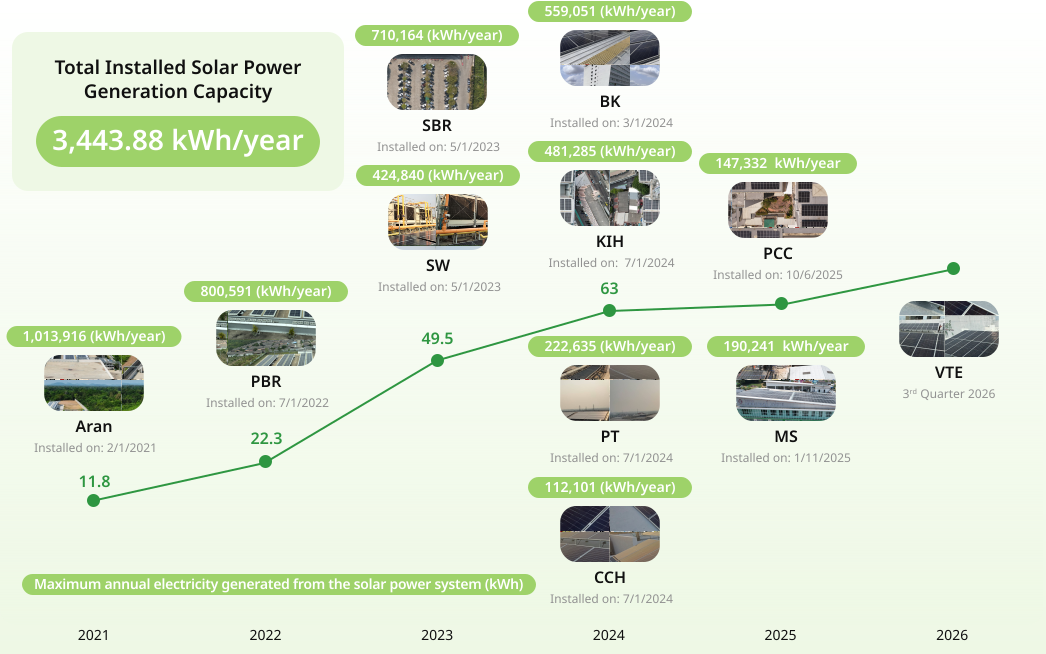
One of the Company's key initiatives was the installation of Solar Rooftop systems. During the year, Solar Rooftop installations were expanded from 8 to 10 facilities, enabling the Company to generate 3,495,146.76 kWh of renewable electricity in 2025. This represented an increase of 31.49% compared to the previous year and accounted for 5.87% of the Company's total electricity consumption.
These achievements reflect the Company's commitment to increasing the share of clean energy while improving energy efficiency, supporting its climate goals of achieving Carbon Neutrality by 2030 and Net Zero Emissions by 2050.
Energy Efficiency Enhancement Program
The Company continuously implements energy efficiency measures, focusing on the management of major energy-consuming systems within its hospitals, including air-conditioning systems, chillers, lighting systems, elevators, escalators, and other supporting equipment. Through optimized operational controls, preventive maintenance, and regular energy consumption monitoring, the Company aims to minimize unnecessary energy losses and improve overall resource efficiency across its operations.

In 2025, the Company implemented key energy-saving measures, including optimizing the operation of chiller and air-conditioning systems in line with actual demand, maintaining appropriate temperature settings, controlling escalator operations during non-peak service hours, managing elevator usage during periods of low occupancy, and promoting the switch-off of unnecessary lighting and electrical equipment. These initiatives contributed to improved energy efficiency while maintaining the quality of healthcare services and ensuring patient safety.


LED Lighting Replacement Project
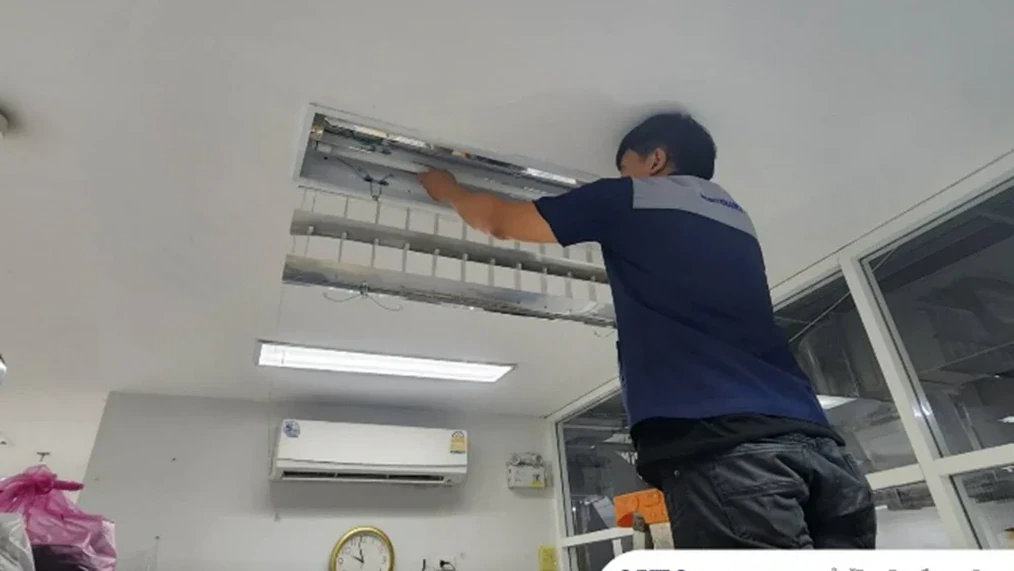
The Company implemented a project to replace conventional lighting systems with high-efficiency LED lighting across its facilities to enhance energy efficiency, reduce electricity consumption, and improve overall energy management performance within its hospitals. Compared with conventional lighting, LED technology consumes less electricity and offers a longer service life, contributing to lower maintenance requirements and reduced replacement frequency.

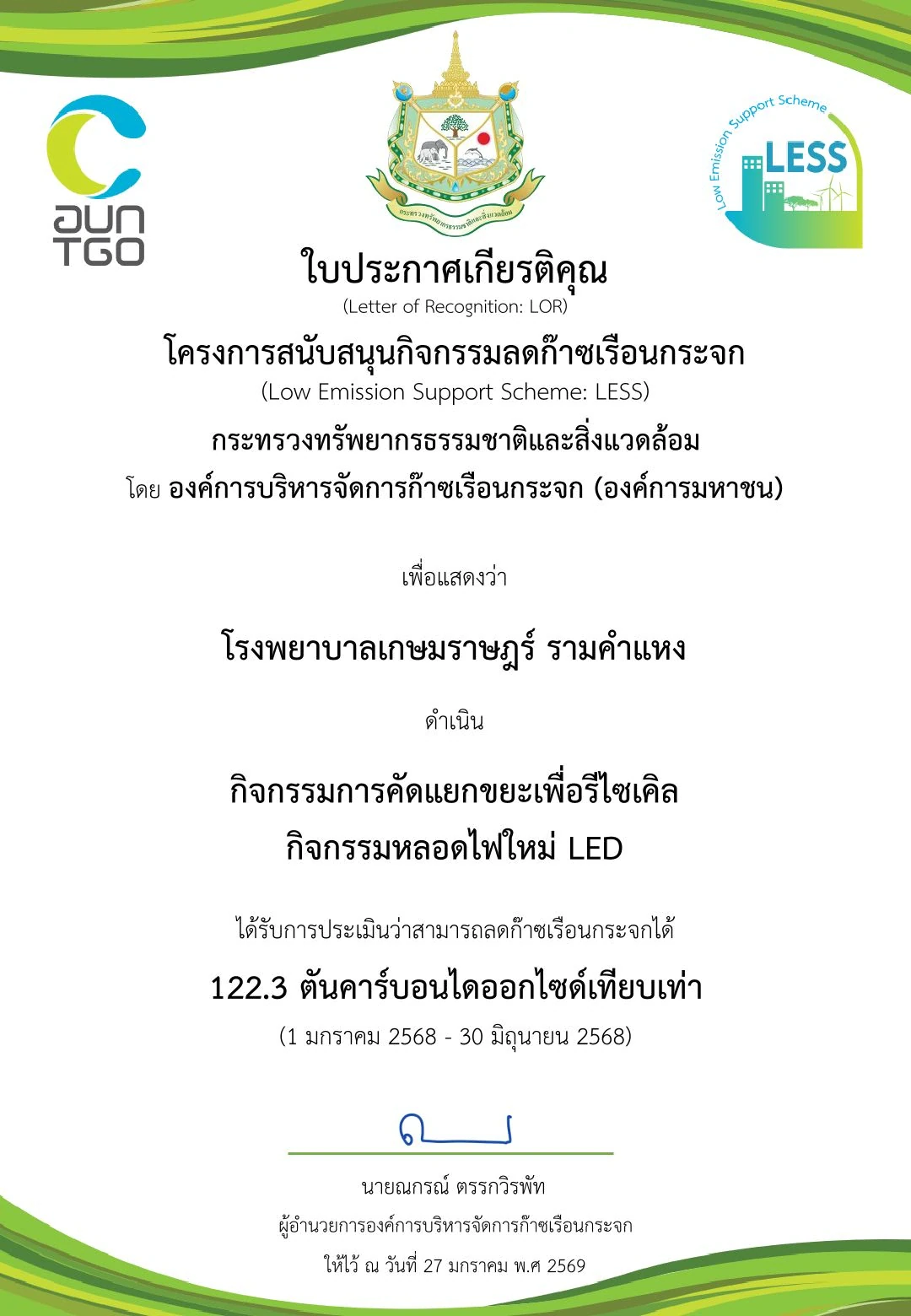
In recognition of these efforts, Kasemrad Ramkhamhaeng Hospital received certification under the Low Emission Support Scheme (LESS) administered by the Thailand Greenhouse Gas Management Organization (Public Organization) (TGO). The LED lighting replacement activity was certified to have reduced greenhouse gas emissions by 977 kilograms of carbon dioxide equivalent (kgCO2e).
Certificate