
Water and Wastewater Management

BCH recognizes the importance of water as a vital resource essential to hospital operations and has established a framework for sustainable water management.
This includes efficient water use, water reuse, and wastewater treatment before discharge to the environment. Amid increasing climate change impacts, such as droughts, floods, and limited access to water resources, BCH prioritizes effective water management to minimize impacts on surrounding communities and the environment while preventing water stress. The company has implemented various system improvements, including upgrades to cooling towers and air conditioning systems, to reduce both water and energy consumption in parallel.

Goals


Key Operational Highlights 2025

m3

(2024 baseline: 59.16 m3 per THB million revenue; 2025 performance: 59.54 m3 per THB million revenue, representing a 0.64% increase from the baseline. The Company targets a 0.3% reduction by 2027 compared with the 2024 baseline.)

of non-compliance with water-related laws and regulations.
In 2025, BCH recorded a water-use intensity of 59.54 m3 per THB 1 million of revenue, compared with the 2024 baseline of 59.23 m3 per THB 1 million of revenue, representing an increase of approximately 0.52% from the baseline year.
BCH has set a target to reduce water-use intensity by 0.3% by 2027 compared with the 2024 baseline, equivalent to approximately 59.05 m3 per THB 1 million of revenue or lower.
BCH continues to implement water-efficiency measures across its hospital network, including water-use monitoring, leakage prevention, system maintenance, water reuse, and water-saving technologies to support achievement of the target.
Water Risk Management
The Company recognizes that water is a critical resource for healthcare services and business continuity. The Company regularly conducts water stress assessments across its healthcare facilities using the Aqueduct Water Risk Atlas developed by the World Resources Institute (WRI) to evaluate water risk levels in each location. The assessment results are incorporated into water resource management planning, water efficiency initiatives, and preparedness measures to address potential future water-related risks.
The 2025 assessment found that the Company's healthcare facilities are located in areas with water stress levels ranging from Medium–High to Extremely High. Based on the assessment results, the Company prioritizes water consumption monitoring, water efficiency improvement, inspection and maintenance of water supply systems to minimize water losses, and implementation of water management measures appropriate to the risk level of each location. These efforts support the continuity of healthcare services and enhance the Company's resilience to long-term water-related risks.
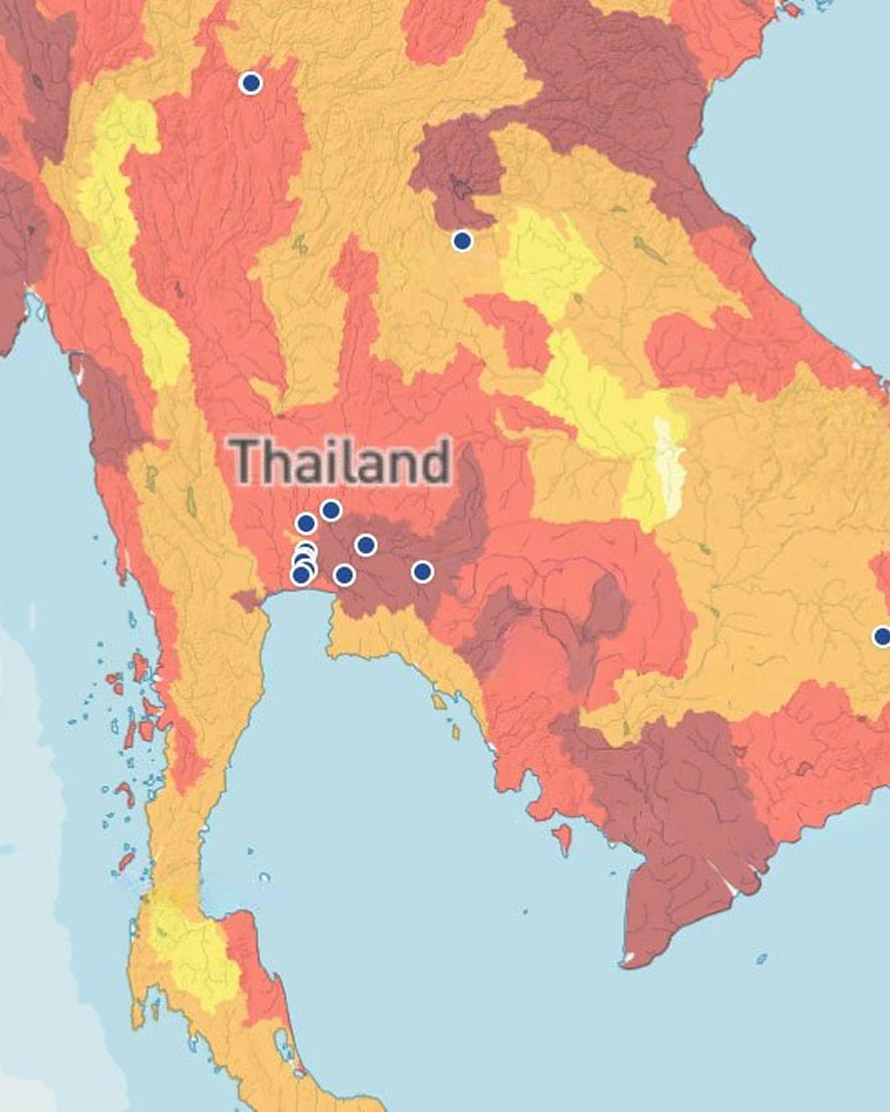
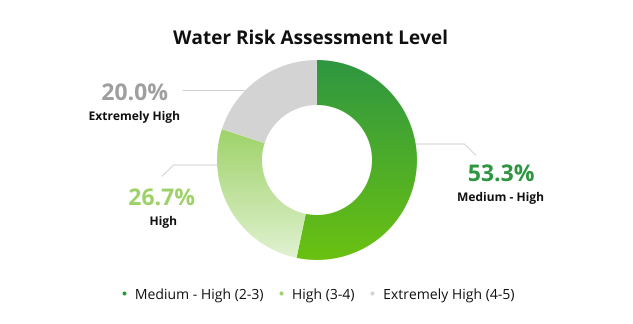
Water Withdrawal by Water Stress Level, 2025
| Water Stress Level | Number of Healthcare Facilities | Water Withdrawal (m3) | Share of Total Water Withdrawal (%) |
|---|---|---|---|
| Medium-High | 9 | 360,694.00 | 50.34 |
| High | 5 | 186,878.55 | 26.08 |
| Extremely High | 3 | 169,021.00 | 23.59 |
| Total | 17 | 716,593.55 | 100 |
- Low-Medium Risk (5 sites): Kasemrad Sriburin Hospital, Kasemrad Mae Sai Hospital, Kasemrad International Hospital Aranyaprathet, Kasemrad International Hospital Vientiane, and Kasemrad Sriburin Clinic, Chiang Saen Branch.
- Medium-High Risk (4 sites): Kasemrad Prachachuen Hospital, World Medical Hospital, Kasemrad Rattanathibet Hospital, and Kasemrad Bangkae Hospital.
- High Risk (4 sites): Kasemrad International Hospital Rattanathibet, Kasemrad Saraburi Hospital, Kasemrad Pathumthani Hospital, and Karunvej Ayutthaya Hospital.
- Extremely High Risk (3 sites): Kasemrad Chachoengsao Hospital, Kasemrad Prachinburi Hospital, and Kasemrad Ramkhamhaeng Hospital.
- Water stress levels were assessed using the Aqueduct Water Risk Atlas developed by the World Resources Institute (WRI).
Water Sources
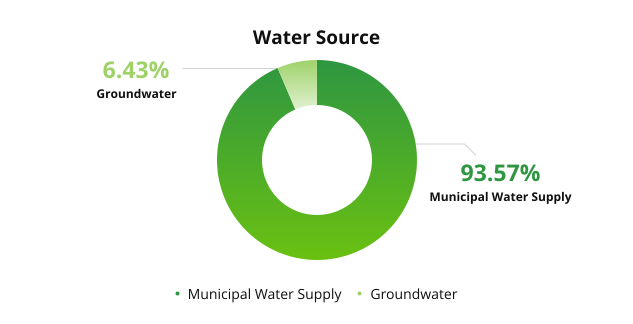
In 2025, the Company's operations relied on municipal water supply and groundwater. Municipal water represented the primary water source, accounting for 93.57% of total water withdrawal, while groundwater accounted for 6.43%. The Company did not withdraw water from surface water, seawater, or other alternative water sources during the reporting year.
| Water Source | Water Withdrawal (m3) | Percentage (%) |
|---|---|---|
| Municipal Water Supply | 670,493.55 | 93.57 |
| Groundwater | 46,100.00 | 6.43 |
| Total | 716,593.55 | 100 |
Water Management Target for Extremely High Water Stress Areas
Based on the Company’s water risk assessment, Kasemrad Hospital Chachoengsao, Kasemrad Hospital Prachinburi, and Kasemrad Hospital Ramkhamhaeng are located in areas classified as Extremely High Water Stress. The Company has therefore established a specific water management target for these three hospitals to improve water-use efficiency and reduce water-related risks in these areas.
| Target | Performance |
|---|---|
| Target sites: Kasemrad Hospital Chachoengsao, Kasemrad Hospital Prachinburi, and Kasemrad Hospital Ramkhamhaeng | 2025: Combined water use of the three hospitals was 169,021.00 m³ |
| Base year: 2024 | The Company continuously monitors the combined water use of the three hospitals as a group. |
| Target: Reduce the combined water use of the Extremely High Water Stress Sites Group by 0.5% from the base year | Performance is monitored and assessed against the established target. |
| Target year: 2027 | The Company continues to implement measures to improve water-use efficiency and reduce water losses across the target sites. |
The Company places particular emphasis on water management in high-risk areas through measures such as improving water-use efficiency, inspecting and maintaining water systems, reducing water losses, and continuously monitoring water use to support achievement of the 2027 target.
Water Risk Management Approach
The Company uses the results of its water risk assessment to develop water management measures tailored to the context of each healthcare facility. Key initiatives include improving water use efficiency, inspecting and maintaining water supply systems to minimize water losses, continuously monitoring water withdrawal, and promoting water conservation awareness among employees.
For healthcare facilities located in areas with High and Extremely High water stress, the Company places greater emphasis on closely monitoring local water conditions and regularly reviewing its water management measures. These efforts support the continuity of healthcare services, strengthen operational resilience, and help reduce potential impacts associated with water-related risks.
Business Impacts of Water Risks
Water-related risks may affect the continuity of healthcare services, increase utility costs, and impact the management of water resources across the Company's healthcare facilities, particularly those located in areas with higher levels of water stress. The Company therefore incorporates the results of its water risk assessments into water resource management planning, water efficiency initiatives, and ongoing performance monitoring to strengthen operational resilience and enhance preparedness for potential water-related risks in the future.
Monitoring and Continuous Improvement
The Company monitors its water performance through key indicators, including water withdrawal and water intensity, and regularly reviews the effectiveness of its water management measures. The results are used to identify opportunities for improvement, enhance water resource management practices, and support the achievement of the Company's long-term water efficiency targets.
Management and Operation Approach

Water Risk Assessment and Evaluation

Water Recycling and Reuse Management

Application of Technology and Innovation for Water Management

Water Quality Control and Wastewater Management
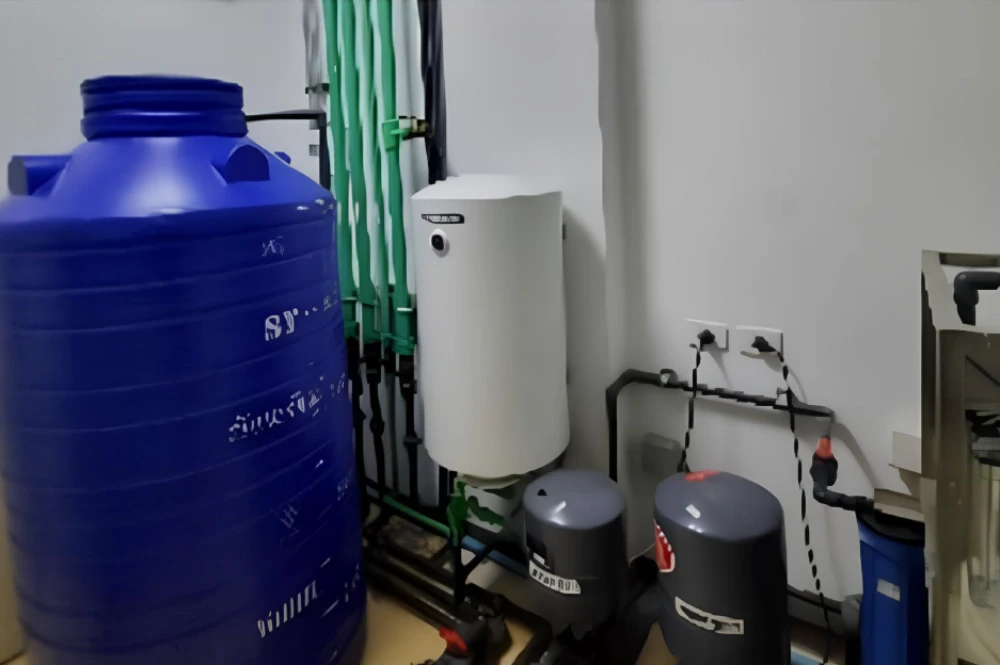
BCH places great importance on efficient wastewater management by engaging external experts to oversee the hospital’s wastewater treatment systems and continuously monitor water quality.
Water samples are collected monthly to analyze key quality indicators, including pH, Total Dissolved Solids (TDS), Total Hardness, Total Coliform Bacteria, and Total Fecal Coliform Bacteria.
In addition, water samples from various points within the hospitals are collected annually to test for Total Coliform, E. coli, and Standard Plate Count (microbial count). The results fully comply with the Department of Health’s Water Supply Quality Standards (2020).
For wastewater management, BCH treats wastewater through a standardized treatment system and performs regular quality inspections. The 2024 annual assessment confirmed that the treated wastewater quality meets the standards set by the Ministry of Natural Resources and Environment (Notification B.E. 2548) before being discharged into the public system.