
Human Capital Development

Employees are regarded as a key driver of BCH’s sustainable success. The company adopts a systematic approach to human resource management
focusing on recruiting, developing, and retaining high-potential personnel. BCH provides fair compensation, benefits, and welfare in compliance with applicable laws, while continuously developing employees’ knowledge, skills, and competencies with clear career advancement pathways. BCH also communicates these principles to partners and business allies to promote shared best practices. In addition, BCH fosters a safe, supportive, and inclusive work environment, promoting equality and non-discrimination, respect for employee rights and freedoms, and ensuring reasonable working hours and fair wages. The company also encourages participation from underrepresented and diverse groups, aiming to enhance employee well-being and cultivate an open and sustainable organizational culture.




Goals


Key Operational Highlights 2025
Overview of Human Resource Management in 2025
Employees are regarded as valuable resources that play a vital role in BCH’s long-term success. Driving the organization towards its vision and mission requires personnel with knowledge, skills, and effective performance. BCH therefore places great importance on the continuous development of human resources, alongside fostering a work environment that supports growth and employee engagement. In addition, BCH is committed to supporting the local economy by prioritizing the employment of personnel from the communities where its hospitals are located, thereby creating job opportunities, enhancing income, and improving quality of life to grow sustainably together with the organization.

(Equivalent to 2.20 training days/person/year)


Management and Operation Approach
Fair Labor Practices

Fair Labor Practices
- Fair Employment and Non-Discrimination
The Company manages its human resources based on the principles of equal opportunity, non-discrimination, and fairness in accordance with applicable labor laws and internationally recognized human rights principles. The Company respects diversity and promotes an inclusive workplace where all employees are treated with dignity and respect.
- Employee Compensation and Benefits
The Company provides fair and competitive compensation and benefits to employees, including participation in the Provident Fund (PVD) and various welfare programs, to support employees’ quality of life, well-being, and financial security.
- Employee Development and Capacity Building
The Company promotes the continuous development of employees’ knowledge, skills, competencies, and professional capabilities through training, education, and lifelong learning opportunities. These initiatives are designed to ensure alignment with professional healthcare standards and service excellence requirements.
- Occupational Health, Safety, and Working Environment
The Company places great importance on occupational health and safety by providing a safe and healthy working environment. Occupational health and safety management is implemented in accordance with applicable laws, healthcare quality standards, and internationally recognized accreditation frameworks, including Healthcare Accreditation (HA) and Joint Commission International (JCI).
- Employee Engagement and Feedback Mechanisms
The Company encourages employee participation through employee relations activities, welfare committees, and internal communication channels. These mechanisms provide opportunities for employees to share feedback, express concerns, and contribute to the continuous improvement of workplace quality and employee well-being.
Employee Development and Training
BCH has established a Human Resource Development Policy to continuously enhance employee capability and readiness. The Human Resources Department and the Medical Secretary Office are responsible for driving this policy into concrete outcomes. The development framework covers four main employee groups physicians, nurses, medical operations and support staff, and general employees focusing on both full-time employees and medical personnel. The training programs aim to ensure that all employees understand their roles, perform effectively, and acquire the necessary skills required for their professional responsibilities.

Employee Training and Development
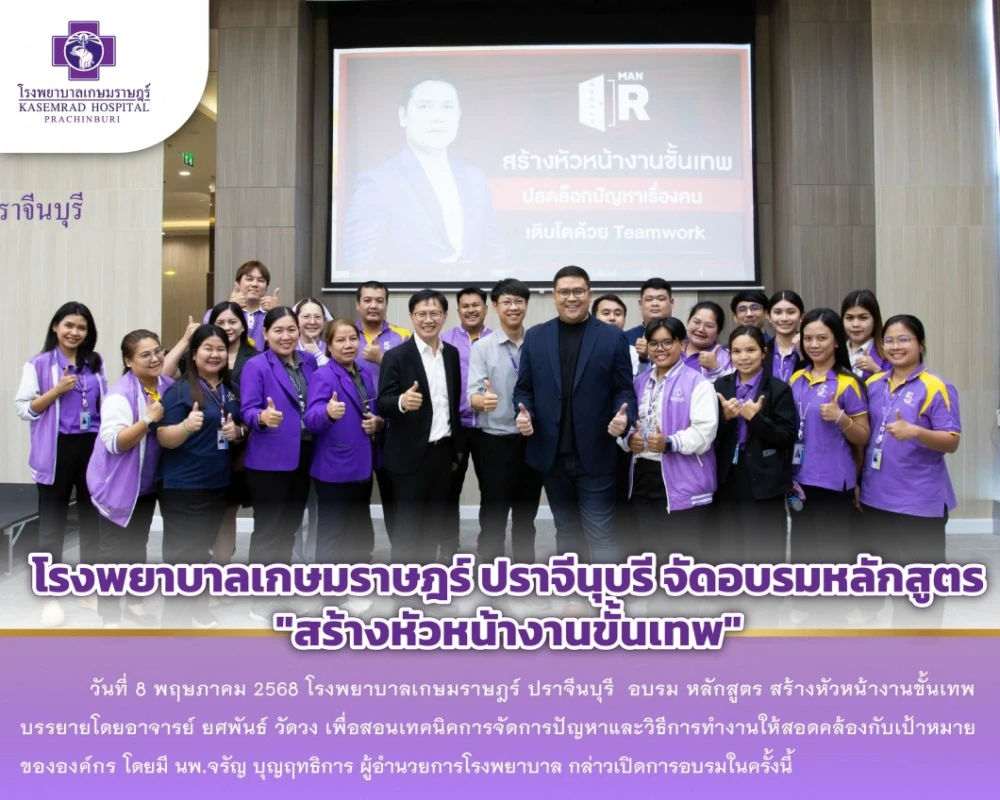
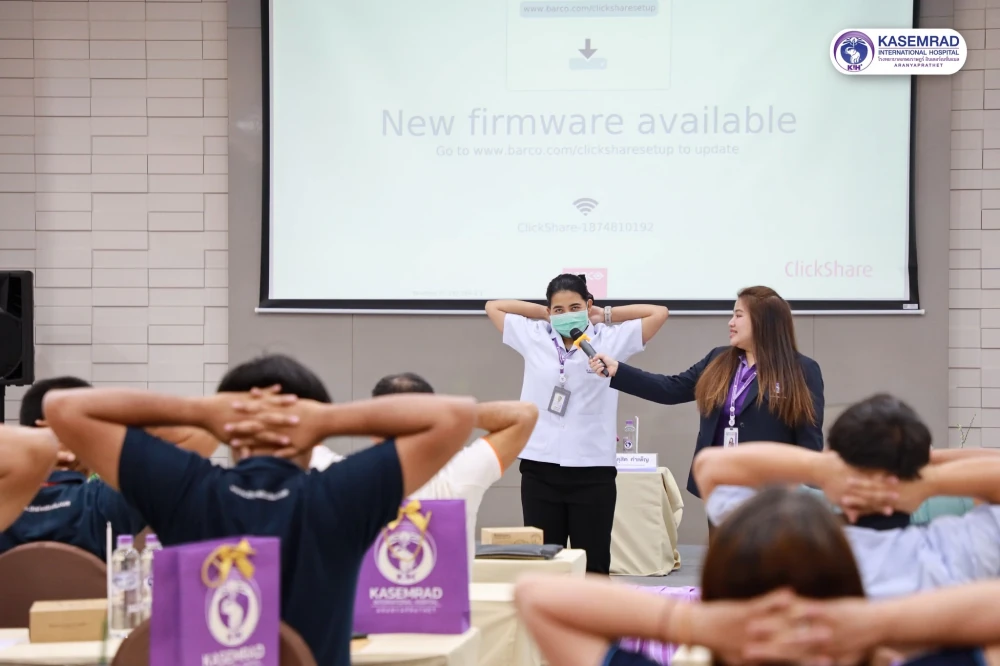
BCH places strong emphasis on continuous human resource development by organizing training programs that enhance employees’ knowledge, skills, and work efficiency across all levels including general staff, executives, and board members. The company also supports medical and emergency life-saving training, as well as service excellence programs to ensure effective and compassionate patient care. In addition, BCH provides training on legal compliance and personal data protection to ensure that hospital operations fully align with professional standards and relevant laws, while continuously improving the quality and safety of medical services to meet the highest standards of care.
In addition, the company conducts annual employee satisfaction and performance evaluations in accordance with Hospital Accreditation (HA) standards, based on each job position. For instance, nurses are required to take a competency assessment after six months of employment. The evaluation results are used to support decisions regarding position promotion and salary adjustments, based on three core assessment criteria. The performance review consists of five main components, of which the first three are evaluated under the general employee framework, followed by specific competency assessments and Key Performance Indicator (KPI) evaluations. These ensure that employee performance is effectively measured against predefined standards and targets established by the company.

Employee Motivation and Retention

Employee Motivation and Retention
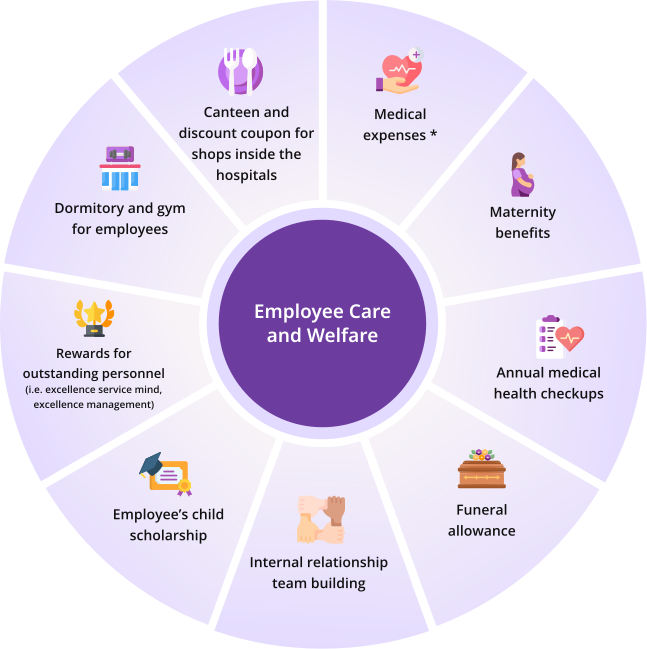
The healthcare service industry relies heavily on highly skilled and specialized professionals, making human resources one of the company’s most valuable assets. BCH places great importance on motivating and retaining employees through competitive compensation and comprehensive welfare programs, while ensuring long-term stability for high-potential personnel amid the industry’s competitive environment. The company has established the Employee Welfare Regulations and assigned the Central Human Resources Division to oversee the well-being and welfare of both permanent and contract employees, ensuring fairness, inclusivity, and consistent care across all hospital branches.
Labor Rights Protection and Employee Participation
BCH places great importance on fair, transparent, and lawful recruitment and employment practices, in full compliance with the Labor Protection Act B.E. 2541 (1998) and the minimum wage regulations issued by the Ministry of Labor. The Company sets employee wage rates above the applicable statutory minimum wage requirements. The Company ensures that all employees receive complete legal benefits and entitlements, while maintaining a commitment to fair and adequate compensation that supports employees’ cost of living and encourages long-term organizational engagement.

Fair Labor Management and Employee Engagement
In managing working hours, the Company strictly complies with relevant labor laws covering both regular working hours and overtime. BCH has implemented a comprehensive shift scheduling and time-tracking system to prevent excessive working hours and reduce unnecessary or excessive overtime. The Company monitors working hours, manages workloads and staffing as appropriate, and provides adequate rest periods to promote employee health, safety, and well-being.
Inclusive Employment Opportunities
BCH is committed to promoting inclusive and equitable employment opportunities for individuals who may face barriers to employment, including persons with disabilities, older persons, and other vulnerable or underrepresented groups. The Company provides fair access to employment based on job requirements, qualifications, skills, and individual potential, without discrimination, while complying with applicable labor laws and equal opportunity principles.
BCH also supports initiatives that promote employment opportunities and sustainable income for vulnerable groups, contributing to social inclusion and improved quality of life.
BCH respects labor rights in accordance with the Labor Relations Act B.E. 2518 (1975) and other relevant labor laws, upholding the principles of freedom of association and the right to collective bargaining. BCH is committed to supporting employees’ ability to organize or participate in collective bargaining with employers in a free, transparent, and fair manner. This approach aims to foster positive labor relations and promote sustainable organizational development.