
Corporate Governance and Code of Conduct

BCH operates its business with transparency, integrity, and accountability, adhering to strong principles of good corporate governance and ethical conduct.
The Company is committed to creating both short- and long-term value and sustainability through systematic and standardized management processes. Strong governance reinforces trust and confidence among investors, enhances access to financial resources that support continuous growth, and strengthens organizational resilience. BCH also prioritizes risk management and anti-corruption practices, following relevant laws and international standards to ensure operations that are stable, transparent, and truly trustworthy.

Goals


Key Operational Highlights 2024

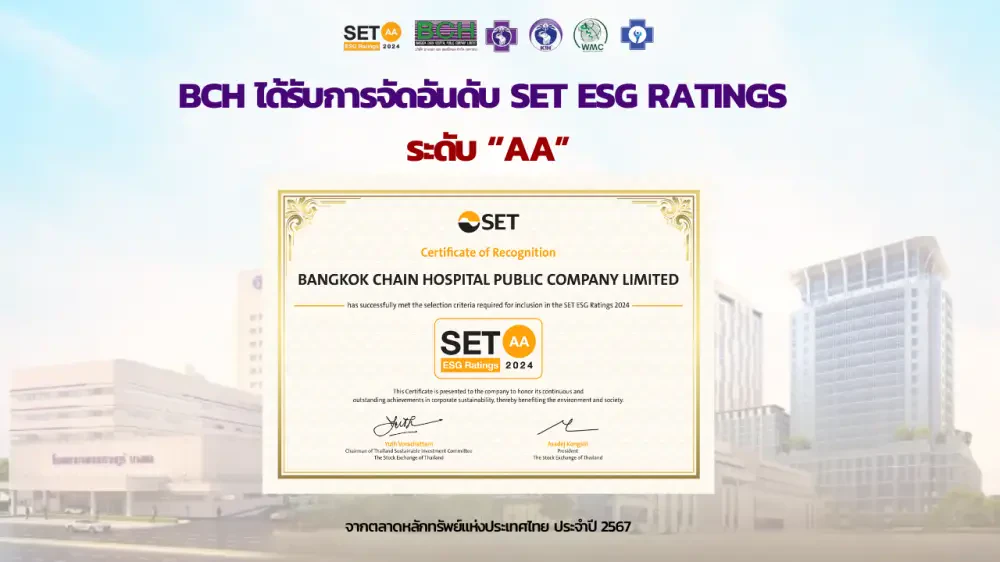
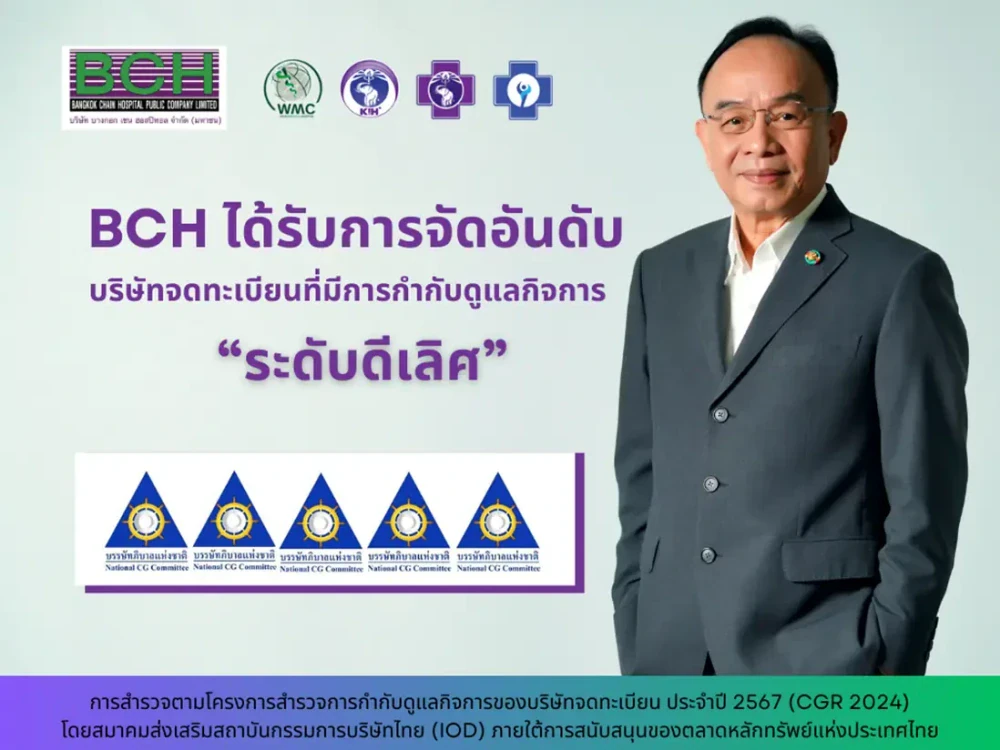
Achieved “Excellence” Rating
Under the Corporate Governance Report of Thai Listed Companies (CGR) by the National Corporate Governance Committee.



Management and Operation Approach
BCH places strong emphasis on conducting its business with integrity, transparency, and accountability to society and all stakeholders. The Company has established a Corporate Governance and Business Ethics Policy in alignment with the Principles of Good Corporate Governance issued by the Securities and Exchange Commission (SEC) and the Stock Exchange of Thailand (SET).
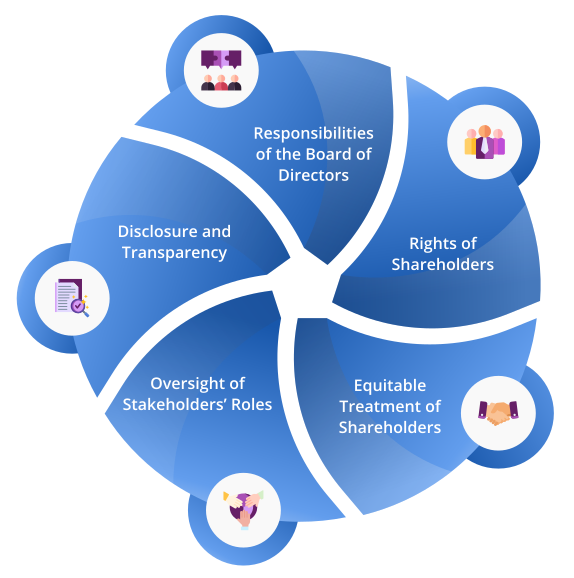
The policy encompasses five key principles: Rights of Shareholders, Equitable Treatment of Shareholders, Roles of Stakeholders, Disclosure and Transparency, and Responsibilities of the Board of Directors These principles extend across the Company’s entire value chain, ensuring fairness and responsibility toward all stakeholder groups. To reinforce this commitment, BCH has developed the Code of Business Ethics and the Good Corporate Governance Manual as operational guidelines, promoting efficiency, sustainable growth, and stakeholder confidence. In addition, BCH continuously reviews and updates its governance practices by adopting recommendations from the Thai Institute of Directors (IOD) to ensure that the Board of Directors performs effectively and that corporate governance practices remain consistent, leading to a strong and sustainable organizational culture.
The Company has adopted the Corporate Governance Code (CG Code) as appropriate to its business context. BCH recognizes Board diversity, including gender diversity, as an important element of effective corporate governance and is committed to promoting gender diversity on the Board of Directors. The Company provides equal opportunity in the nomination and selection of directors without discrimination based on gender and considers gender diversity alongside knowledge, capabilities, experience, expertise, and suitability for the Company’s strategic direction.
Currently, female directors account for 25% of the total Board members. The Company will continue to review the composition and gender diversity of the Board as part of its director nomination and succession planning process to maintain an appropriate and balanced Board composition.
Board Structure
In 2025, the Board of Directors of BCH comprised a total of 12 members, consisting of 1 Chairman, 7 Directors, and 4 Independent Directors. To ensure effective governance and efficient performance, the Board has established several sub-committees with clearly defined duties and responsibilities, including: The Executive Committee, The Audit Committee, The Nomination and Remuneration Committee and The Sustainability, Governance and Risk Management Committee These committees provide oversight and support the Board in supervising the Company’s operations, ensuring transparency, accountability, and alignment with good corporate governance principles.
As of December 31, 2024, the Company’s Board of Directors comprised a total of 12 members, consisting of :




| Board Skill Matrix | ||||||||||||
|---|---|---|---|---|---|---|---|---|---|---|---|---|
| Name and Specific Expertise | Medical and Hospital Management | Accounting | Finance | Law | Sales and Marketing Strategy | Business Administration and Business Ethics | Economics | Risk Management | Information Technology | Board Classification | ||
| Executive Director | Non-Executive Director | Independent Director | ||||||||||
| 1. Asst. Prof. Dr. Somporn Harnphanich, M.D. | ||||||||||||
| 2. Prof. Dr. Chalerm Harnphanich, M.D. | ||||||||||||
| 3. Ms. Pornluck Harnphanich, M.D. | ||||||||||||
| 4. Mr. Kantaporn Harnphanich | ||||||||||||
| 5. Mr. Phinij Harnphanich | ||||||||||||
| 6. Ms. Pornsuda Harnphanich, C.P.S. | ||||||||||||
| 7. Mr. Voravee Kiatiniyomsak | ||||||||||||
| 8. Mr. Surapant Taweewikayakarn, M.D. | ||||||||||||
| 9. Assoc. Prof. Virach Aphimeteetamrong, Ph.D | ||||||||||||
| 10. Mr. Siripong Sombutsiri | ||||||||||||
| 11. Prof. Piphob Veraphong | ||||||||||||
| 12. Mr. Thawat Suntrajarn, M.D. | ||||||||||||
| Total | 7 | 5 | 8 | 2 | 2 | 12 | 11 | 12 | 1 | 7 | 5 | 4 |
Performance Evaluation of the Board of Directors, Sub-Committees, and Chief Executive Officer (CEO)
BCH places great importance on good corporate governance and therefore conducts annual performance evaluations covering the Board of Directors as a whole, individual directors, sub-committees, and the Chief Executive Officer. The evaluation process utilizes a Self-Assessment Form at both the collective and individual levels, serving as a mechanism for monitoring, reviewing, and ensuring that operations align with the assigned responsibilities and the principles of good corporate governance.
The Board of Directors has established evaluations for four sub-committees: the Executive Committee, the Audit Committee, the Nomination and Remuneration Committee, and the Sustainability, Governance, and Risk Management Committee. The results of these evaluations are used to continuously improve and enhance the effectiveness of the Board’s performance.


Furthermore, in 2025, the Company held one meeting among non-executive directors without management present to enable independent discussions on corporate governance and other key Company matters. The comments and recommendations arising from the meeting were communicated to the relevant management for appropriate action.
Board Training and Development

BCH places great importance on enhancing the knowledge and capabilities of the Board of Directors and executives to ensure effective performance and responsiveness to changes in the business environment, relevant laws, and international standards.
The Company encourages and supports directors and executives to attend training programs relevant to their roles and responsibilities, aimed at strengthening their understanding of Good Corporate Governance (GCG), Risk Management, Accounting and Finance, Legal Compliance, and Sustainable Business Development. In 2024, the training programs undertaken by the Board and executives were as follows:
- Mastering the Dynamics of Excellence by the Private Hospital Association
- Import-Export Business Training for accounting, taxation, and Revenue Department audit, by Dharmniti Seminar and Training Co., Ltd.
- Conceptual Framework for Financial Reporting by the Department of Business Development (DBD)
- Mini Master of Management in Health by the ASEAN Institute for Health Development and the Preventive Medicine Association of Thailand
- Financial Reporting Standards for NPAEs, including accounting system setup and digital-era auditing
- Valuation of Companies for Modern Business by the Stock Exchange of Thailand and the Investment Analysts Association (IAA)
Anti-Corruption

BCH has established a formal Anti-Corruption Policy, Anti-Corruption Guidelines, and a Whistleblowing and Complaint Policy to ensure that all directors, executives, and employees strictly acknowledge and adhere to these principles. The policy is reviewed at least once a year, and regular anti-corruption training is provided to the Board of Directors and management. Furthermore, BCH has expanded communication and training programs on anti-corruption to employees and business partners.
Each department is required to develop written operational procedures that must be reviewed and approved by the respective executives to ensure compliance. These procedures emphasize segregation of duties and transparency throughout work processes, helping prevent or detect corruption risks. The Company has also defined specific business conduct guidelines for activities that may pose corruption risks, covering both the public and private sectors.
Whistleblowing, Reporting Channels, and Complaint Investigation
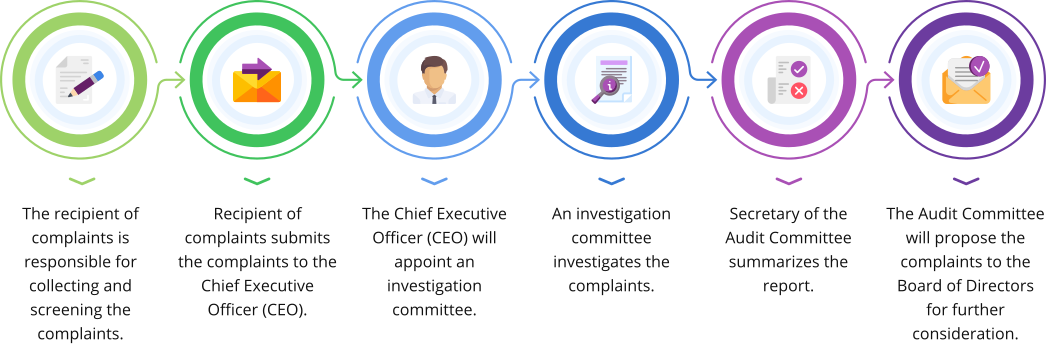
BCH provides opportunities for directors, executives, employees, and both internal and external stakeholders of the Company and its subsidiaries to submit opinions or complaints on any issues that may affect them such as violations of law, business ethics, corruption, conflicts of interest, deficiencies in internal controls, service issues, employee rights, and human rights. Complainants are not required to reveal their identity to ensure protection of their rights. The Company will keep all identifying details strictly confidential, accessible only to authorized personnel responsible for handling complaints. Representatives authorized to participate in the review process include:
Human Resources Manager or departmental representative
The complainant’s supervisor, provided there is no conflict of interest
Representative from the Risk Management Working Group
Secretary or representative of the Audit Committee
If an investigation confirms that the Company’s actions have caused negative impacts to stakeholders, BCH will determine appropriate remedies on a case-by-case basis and use the findings to improve policies, preventive measures, and operational processes for future enhancement.
Whistleblowing Channels

Whistleblowing Channels
Risk Management Processes
BCH recognizes the importance of effective corporate management and risk governance to ensure organizational stability, sustainable growth, and a strong financial position that delivers appropriate returns to shareholders. The Company integrates risk management and sustainability considerations across environmental, social, and governance (ESG) dimensions. To achieve this, BCH has established risk management policies and procedures as operational guidelines to ensure the risk management process is efficient, standardized, and aligned with Good Corporate Governance principles. The Company’s internal risk management framework is implemented through the following processes:


BCH faces various risk factors that may affect its operations and competitiveness in the healthcare market. These include changes in government policies and regulations, the need to adapt to rapidly evolving technologies, cybersecurity and data privacy risks, as well as economic volatility and industry competition. In addition, internal factors such as human resource management and maintaining service quality are also crucial and require continuous oversight and improvement to ensure operational excellence and meet patient needs effectively under all circumstances. To address these challenges, BCH conducts regular impact assessments and develops comprehensive risk management plans, along with preventive and adaptive measures, to enhance the company’s resilience and ensure sustainable and stable business operations.

- Emerging infectious disease risks
- Climate change risks

- Social and community risks
- Litigation risks
- Risk of reliance on a few suppliers in the importation of pharmaceuticals and/or medical supplies

- Risks from the government's health policies
- Competitive risks in the private hospital business
- Personnel shortage risks
- Litigation risks
- Corruption risks
- Risks of personal data breaches
- Investment risks of securities holders
- Investment risks of foreign securities
- Risk of non-compliance with laws, regulations, standards related to business operations, and environmental laws
- Credit risks
- Liquidity risks
- Interest rate volatility risks
- Foreign exchange rate volatility risks
- Information technology system change risks
- Information Technology Security Risks
- Risks Arising from False or Inaccurate Public Health Communications
BCH aims to foster a risk-aware culture throughout the organization and expects employees to be aware of the risks inherent in their day-to-day business activities, taking responsibility for managing them effectively through the following practices:
-
Risk Management Training
Risk management training is provided to hospital personnel, including executives, department managers, supervisors, and staff. The objective is to enhance the effectiveness of risk management operations within the hospital.
-
Collaboration with Skill Labor Development Center, Nonthaburi province, to arrange risk management training in compliance with international standards.
BCH conducted risk management training for hospital personnel under the Skill Development Promotion Act B.E. 2545 (2002), in collaboration with the Nonthaburi Skill Development Office. The course content includes the importance of risk management, processes, governance, risk control, and internal control.
BCH conducts a Business Continuity Plan (BCP) to improve the efficiency of BCH’s business operations. BCH provides a prevention and mitigation plan in 7 areas as follows:
- Fire Prevention and Mitigation Plan
- Casualty Prevention and Mitigation Plan
- Computer System Failures Prevention and Mitigation Plan
- Natural Disaster Prevention and Mitigation Plan
- Rescue Incident Prevention and Mitigation Plan
- Threatening / Abduction Prevention and Mitigation Plan
- Mass Casualty Incident Prevention and Mitigation Plan
BCH assessed the Company’s internal control system in 5 parts as follows:
- Organization and environment
- Risk management
- Operation control of the management
- Information and communication systems
- Communication systems and monitoring
In 2025, the Board of Directors, the Audit Committee, and the management jointly assessed the adequacy and effectiveness of the Company's internal control system by considering the results of internal audits, recommendations from the external auditor, and additional observations from the management. The assessment concluded that the Company has an adequate and effective internal control system, supported by appropriate internal control measures.
For its subsidiaries, the Company requires each subsidiary to maintain an internal control system consistent with the Company's internal control framework. The internal audit function also conducts regular audits of the subsidiaries' operations. The 2025 assessment confirmed that both the Company and all subsidiaries maintained adequate and effective internal control systems covering all five components of the internal control framework adopted by the Company.
The Company has appointed Thammasat Internal Audit Co., Ltd. as its outsourced internal audit service provider, with Ms. Wannathanee Wongbutrod serving as the Head of Internal Audit, reporting directly to the Audit Committee. In addition, the Company has appointed Ms. Somruethai Hemthanon, Assistant Manager, Systems Development and Support Department, as the internal coordinator between the Company and the outsourced internal audit service provider to facilitate internal audit activities, monitor audit findings, and coordinate with relevant departments to ensure the effectiveness of the internal audit process.